15.1: Fire

Any fire on-board an aircraft during a flight has the potential for catastrophe. It's for this reason that many airline training programs provided to all cabin crew focus on fire awareness and what to do in the event of a fire. This includes fighting the fire, the causes of fire, ignition sources, and information on the layout of the aircraft. There will be hidden areas where a fire can occur, with no access point, and the only indication of the fire existing is smoke in the cabin.
The cabin crew are the first and only responders who are trained to airline standards to fight the fire with the appropriate fire fighting equipment. All cabin crew must be familiar with the location of all fire extinguishers, and protective breathing equipment (PBE). Just as important to note is that the cabin crew uniform plays an important role in the event of fire. One reason for that is that wearing the full uniform provides an extra coat of protection from burns in the event of a fire.
15.2: Fire Prevention Takes Precedence
Prevention is always best; therefore cabin crew should always be on alert to any potentialfire hazards. This includes checking for dangers such as paper or flammable debris in overhead compartments, checking for spilled oils in the galley, fat spillages, and any smouldering items that could indicate an electrical malfunction of on-board catering equipment.
A fundamental role cabin crew play in fire prevention is ensuring any spills of oil or fat in the galley are cleaned up immediately; checking ovens before switching them on making sure any cooking apparatus are free of labels, spilled materials; and everything used in the galley is undamaged. When checking lavatories, the smoke detectors should be examined to ensure passengers haven't tampered with them. It is also necessary to make sure that there are no cigarette ends in the trash bin.
Within the cabin, all the seating area and toilets are fire resistant. Fire extinguishers are located throughout the aircraft. Despite the safety measures manufacturers take to ensure the risk of fire is minimised, they still do occur. This is why your vigilance is so important. While a fire is usually easy to spot, on an aircraft this isn't always the case. On-board an aircraft there are numerous hidden areas, where the only indication of a fire occurring is the existence of smoke. There are times when even smoke may not be visible, and in such cases, it may be the fumes or unusual odours that alert those on-board to an ongoing fire.
Other signs of a potential fire include:
a.Circuit breakers tripping out due to an electrical malfunction
b.Popping noises, and crackling sounds, which can also indicate an electrical problem that poses a fire risk
c.Parts of the aircraft, such as the floors, side-walls or panels becoming hot
d.All of these signs will require a prompt investigation from the cabin crew.
15.3: Health Indicators of a Fire

When there's absolutely no visible sign, nor smell of a fire existing, there are still other factors that need to be investigated.
Such instances can include passengers, or cabin crew developing a sudden irritation of the eyes, a sore throat, and perhaps headaches. These are signs that there may be a leak of gas fumes. When gas fumes come into contact with the slightest source of ignition, they can swiftly result in a fire.
Throughout the duration of a flight, the cabin crew are on constant alert for fires and the potential for one to occur. If a fire does break out during a flight; the cabin crew adopt the role of a fire fighter instantly.
15.4: Fighting Fire During a Flight
Each airline will have its own procedures for dealing with in-flight fires, but they all focus on time being of the essence. The faster the fire is located, the quicker it can be extinguished. As soon as a cabin crew member is aware of a fire, they must alert the flight crew immediately. This is so they know right away that there's a technical problem, and to be on higher alert for an emergency situation.
Throughout the event, the flight crew will need constant updates on how the situation is progressing. This is so they know the procedures that are in place, and which actions to take in line with the nature of events occurring in the cabin. Doing all of this maximises your chances of keeping the flight as safe as possible. In the event that there's a suspected fire, such as a burning odour, crackling or popping sound, but there are no visual signs of a fire, the flight crew must also be notified immediately that cabin crew are investigating the possibility of a fire on-board.
When a fire is suspected, the cabin crew's knowledge of the flight layout is central to a fast investigation, which is needed to track the source. This then allows them to fight the fire with the appropriate fire extinguishers, and the use of PBE if required. Some airlines may require their cabin crew to undergo training on the layout of the flight, to ensure they're fully aware of the high risk areas where a hidden fire may occur.
When investigating a potential fire, it's important that the cabin crew work together, and have additional fire extinguishers at the ready, PBE, and other fire fighting and safety equipment; including flash-lights.
When a fire is found, the first cabin crew member will fight the fire using the fire extinguisher, the second on the scene communicates immediately with the flight crew, while the third secures thearea by removing flammable material such as oxygen tanks, and closing the air vents to prevent the fire spreading. All electrical equipment must be switched off using the flight's electrical system circuit breakers, and removal of any luggage to prevent the fire from being further aggravated is essential.
Passengers close to a fire will be moved away from the area, to prevent smoke inhalation. Ideally, the cabin crew would provide wet blankets for standby; however, an announcement would be made over the PA instructing passengers of the situation, which includes issuing instructions to cover mouths to prevent smoke inhalation.
Under no circumstances should the emergency oxygen masks be used during a fire, unless a cabin crew member is required to provide oxygen to treat smoke inhalation, and that will only be done in a separate and remote area on the flight at a safe distance away from the fire.
15.5: Cabin Crew Fire Procedures During a Flight
a.Immediately notify the flight crew using the emergency intercom system
b.Use PBE, and other protective equipment such as protective gloves
c.Wear their full uniform to provide an added layer of protection from burns
d.Take precautionary measures when removing any panels on the aircraft to identify a fire as this could lead to damaging the aircraft structure, or encourage the fast spread of the fire
e.Use the right fire extinguisher when fighting the fire
15.6: Sourcing Hidden Fires
A significant risk on aircraft is the hidden fires, where there's only a small indication of the danger being present. Knowledge of the aircraft layout is essential for sourcing fires hidden from visibility. Within every flight there's a range of technical components essential for all the infrastructure of the aircraft.
Most aircrafts have limited to no access at all to certain areas. That could be the side-walls, the cargo area, overhead panelling, the air ducts of the aircraft etc. Any one of these areas could have smoke coming from them, with no way to access it to extinguishthe fire. When there's smoke emitting from any area of an aircraft, there's an immediate threat to passenger and crew safety, and this will require prompt action from the flight deck.
Smoke emerging from the joints of a side wall panel could be an indication of an electrical malfunction, which may ignite some other form of flammable material. There are also the fumes from smoke to consider, as they will interrupt the air supply throughout the cabin.
Within the majority of hidden areas of an aircraft, there's electrical wiring, insulation, air conditioning units, and the oxygen supply for emergency use. All of these are serious hazards when a fire breaks out, and when it's only smoke or the odour of smoke, it's these areas that hide the most dangerous of fires an aircraft can encounter.
Because of that, airlines will train their cabin and flight crew to familiarise themselves with the high risk areas on their aircrafts, and they will ensure that all crew members are familiar with these places, and the risks they pose to flight safety The more familiar a crew member is with the aircraft layout, the faster the source of a fire can be identified and extinguished.
15.7: Aircraft High Risk Areas

The overhead area above storage compartments Above the ceiling panels is a major fire hazard. It's where wiring is housed in bundles, surface cables are installed, the emergency oxygen system is kept, air conditioning units are stowed away, and electrical components to operate in-flight entertainment system are situated. (IFE)
The return air grill On either side of the cabin, and in cabin crew rest areas are where air vents are located. These are used for the air conditioning units to supply air through the cabin ceiling. As the air flows from the top of the cabin, reaching the bottom, it'll then pass through the return grills and then exit the aircraft through the outflow valves. That airflow throughout the cabin, if fire interrupts it, can cause it to spread fast and become uncontrollable.
The check area Underneath the cabin floor, but above the cargo area ceiling, there's a check area. Within this
section of an aircraft is a range of hydraulic lines, wire bundles, and other electrical
components.
Any hot spots on the cabin floor, aisle, lavatory or any other flooring area may be an indication
of fire in the check area.
15.8: Communication between All Crew Members
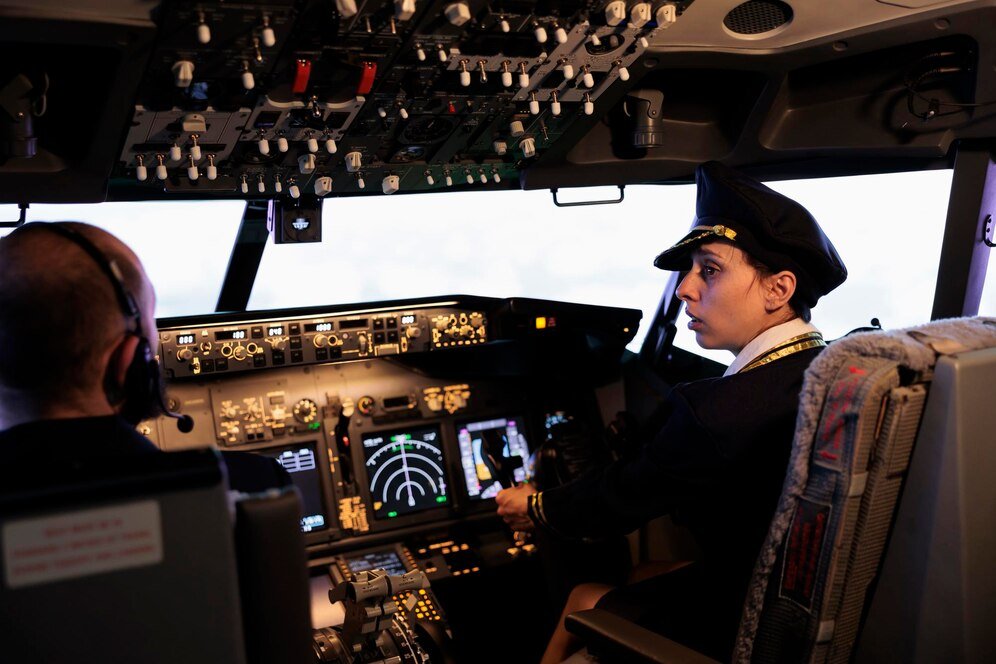
Earlier in this course, synergy was mentioned. This one area where synergy plays a crucial role to the safety of everyone on-board an aircraft.
Synergy:
One Goal, with everyone united working together to achieve a successful outcome. Teamwork, when all crew members are working in synergy, is the only way to guarantee the most efficient outcome with minimum distress. This is where the fundamental aspect of communication comes in, and there's no way for just one cabin member to fight a fire and keep all crew members updated. It takes a team of at least three cabin members.
1. The first cabin member fighting the fire
2. The second cabin crew member on the scene uses the intercom system to place an emergency call to the flight crew
3. The third cabin member on scene provides fire fighting back up to the first cabin crew member.
All other cabin crew will be working within the cabin, communicating with passengers. It's important for all passengers to be kept updated with the ongoing situation and it's imperative that all cabin crew announcements over the PA system are made in a reassuring manner, contributing to maintaining a calm atmosphere within the cabin.
The most important thing for the second cabin crew member on the scene of a fire to remember is that the communication they are maintaining with the flight crew will have a direct contribution to the course of action the flight crew take.This communication requires concise details on everything that's happening.
The mandatory information the flight crew will require are:
a.The name of the person reporting the incident
b.The location of the fire
c.The source of the fire (if the information is known)
d.The fire severity, which needs to be as detailed as possible. This will include the density of smoke, the odours that are present, the colour of flames, and how the fire is affecting passengers and cabin crew, as well as the fire severity, plus whether it is small or gaining momentum rapidly.
e.The action other cabin crew members are taking to fight the fire
Regardless of how small the amount of smoke or the fire is, it's imperative that no cabin crewmember underestimates the severity and the implications any size of fire can have on an aircraft, and the impact it can have on safety of everyone on-board.
All cabin crew members must work in unison to fight the fire, and one cabin crew member must always be in communication with the flight crew providing status updates that are as concise as possible. This is the only information the flight crew will have, and it will be what they use to decide on the most appropriate course of action to take. The actions the flight crew take in the event of a fire are directed by the communication they have from the cabin crew member communicating with them.
15.9: Fire Extinguishers in Flights

Aircrafts often have two types of fire extinguishers that can be used:
1. Halon
2. BCF (Chemical name for bromochlorodiflouromethane)
There's been some controversy over the use of Halon, which causes flight and crew members to be somewhat confused. There are mixed opinions on Halon having safety concerns, surrounding the issue of it interrupting the oxygen supply within the cabin. Both types of fire extinguishers are part of the “Halogenated Hydrocarbons” family that act as a liquefied gas to put out fires as they chemical interrupt the combustion chain. It has the same, only safer effect of smothering a fire, thus preventing the fire from spreading.
Whenever the source of a fire cannot be immediately identified, the preferred fire extinguisher is Halon, as even when discharged as a small concentration into an air vent (as an example), it prevents any suspected fire from continuing burning and preventing it to spread. Regardless of whether the fire extinguisher used is Halon or BCF, cabin crew must wear fire protection equipment, and a PBE when fighting any fires, and suspected fires.
Unit 15.10: Teamwork in the Event of a Fire

In the event of a suspected fire or when a fire breaks out, time is of the essence.Therefore, prompt and decisive action on the p cabin crew's part is the first priority. Secondary to a fire or suspected fire, the next crucial element is teamwork. Each cabin crew member must be able to assume individual responsibilities within the team, and know exactly what role they will be taking on if a fire occurs.
The most recommended method of fire-fighting during a flight will require a minimum of three cabin crew members, but can also involve every other cabin crew member, as well as the flight crew. Communication between all cabin crew members is vital. It ensures everyone knows of the hazards, and helps them work together (synergy) for a successful outcome in the safest manner, with minimum distress caused to passengers.
The recommended roles, when a fire and suspected fire occur, are as follows:
a.The fire fighter - This will be the first cabin crew member on the scene. They will immediately summon the assistance of other cabin crew members.
b.Communications – This will be the second cabin crew member, who will communicate with the flight crew and other people of importance.
c.Assistant fire fighter – The third cabin crew member on the scene must be prepared to swap duties with the cabin crew member fighting the fire.
d.Supporting cabin crew members - Every other cabin crew member will have their own
supporting roles, which includes updating passengers and maintaining calm in the cabin(s).
The efforts of all crew members require real time communications, and consistent team coordination. This includes ensuring that every staff member on the flight is aware of the situation and that they are receiving updates from both cabin and flight crew to re-assure passengers, or to make the appropriate safety announcements if an emergency landing is required.
15.11: The Fire-fighter
The first cabin crew member to discover a fire will assume the role of the fire fighter:
a.They will immediately call for other cabin crew members to assist them
b.They will use the nearest fire extinguisher
c.They will proceed to fight the fire
15.12: Communications
Maintaining communications will be the duty of the second cabin crew member on the scene of the fire. The main priority is always to alert the flight crew of the situation. The flight crew only know of the events taking place behind the closed flight deck door through the
cabin crew's communications efforts.. If the flight deck is not alerted, the pilot may not have sufficient information to act in the interests of safety.
Maintaining communications with the flight crew is always a matter of urgency. Throughout the emergency taking place, the second cabin crew member will remain in contact with the flight crew, using the emergency intercoms system. This involves continually relaying real time information on the situation at hand.
Information the flight crew must remain aware of includes:
a.The location of the fire
b.The source of it, once the crew manages to identify it
c.The severity of the flames; how dense the flames and smoke are; the colour of the flames; and any strong odours in the vicinity of the fire.
These are all elements that can help the flight crew determine whether the fire is caused by electrical malfunctions, or if there's danger of
fuel leakage. The number of fire extinguishers employed to fight the fire, as the flight crew will need to establish if there are sufficient fire extinguishers available to control the fire and prevent it from spreading further.
The time the fire fighting procedures commenced
The effect the fire is having in the cabin, and whether any passengers are being affected Depending on the fire severity and location of the intercom system, the cabin crew member responsible for maintaining an open line of communication may need to wear PBE for their own protection.
15.13: The Assistant Fire-fighter
This role will be assumed by the third cabin crew member on the scene.Just as if they were the first on the scene, they will be required to replace the first cabin crew member who is fighting the fire. In the interests of cabin crew safety, the first CCM may not have had sufficient time to don their full uniform for added protection, or to put on protective gloves. The assistant fire fighter can help to rectify this situation. The third cabin crew member on the scene will be required to assist by:
a.Providing back up fire extinguishers
b.Supply the first CCM on scene with protective equipment
c.Supporting the fire fighting efforts of the first CCM
d.Removing any flammable materials in the immediate vicinity that could lead to the fire spreading
15.14: Supporting Cabin Crew Members
Every other cabin crew member on the flight who is not directly involved with the fire is important to the safety of passengers. Any first aid that needs administering will be the first priority of these CCMs. All other passengers will be looking to the cabin crew for reassurance that the situation is under control, which makes maintaining calm another clear priority.
After any fire breaks out, one cabin crew member will need to monitor the area for the rest of the flight until the plane lands safely, ensuring the area doesn't re-ignite. They will be in regular contact with the SCCM, keeping them briefed on the situation, and making sure they are abreast of any changes. Another important aspect is the flight security. Any fire that breaks out is considered a potential security threat, as it could be used as a distraction for those who intend to cause harm while on the flight.
It's for that reason that whenever a fire breaks out during a flight, all other cabin crew and flight crew will be on high alert to security threats. Monitoring passenger behaviour will be the duty of every cabin crew member, who will be continually observing passenger behaviour for any suspicious activity, or any other security concerns.
Any concerns cabin crew have will be first reported to the senior cabin crew member, who will communicate with the flight crew, keeping them abreast of the situation in the cabin.
Unit 15.15: Managing Passengers in the Event of a Fire

In the event a fire breaks out and passengers are close by, the cabin crew must initiate safety measures by moving passengers away from the vicinity to a safe location that is free of smoke, or where smoke is minimised. Doing so reduces the risk of smoke inhalation.
When there is a high amount of smoke that is causing health concerns to passenger safety, the cabin crew members will instruct passengers to use any materials they have to cover their nose and mouth, which should minimise the amount of smoke inhaled.When time permits, cabin crew members will supply all passengers with wet blankets, which can be used to maintain a safe body temperature and prevent smoke inhalation.
When there are passengers requiring oxygen after inhaling smoke, the cabin crew will need to move the passenger away from any immediate danger, as no oxygen provision can be administered in close proximity of a fire. This is because the equipment used to deliver oxygen poses a further hazard, due to its flammable nature.
All passengers react differently to danger. Therefore, the duty of the cabin crew will be to maintain a calm atmosphere in the cabin by reassuring passengers that the situation is under control. The vast majority of passengers will display distress signs, and panic is one of the signs that can manifest. As panic can lead to air rage, it's of the utmost importance that cabin crew members maintain a calming and observable presence within the cabin, as this can instil calm in others onboard.
Cabin crew members must be consistently updating and reassuring passengers that the situation is under control. All cabin crew members who aren't directly involved with the extinguishing of an on-board fire will be required to maintain a visible presence in the cabin. They should spend time administering first aid as required, while providing updates and reassurance to maintain a calm and safe environment.
Module Summary
Fires can occur on any flight, even when you have performed all the necessary checks prior to check off. Not all fires are visible, which is why you need to know what the signs of a hidden fire are. This module explained how to detect fires using signs like smoke, odours, and the appearance of passengers. Such signs can also help you detect potential hazards, like gas and substance leaks. Your basic duties in preventing fires were also covered, such as putting equipment in the right place and clearing up particular spillages. You also learned how to communicate with all staff, how to maintain calm, and exactly what a fire extinguisher does.
.svg)