16.1: Aviation Security & Health and Safety

Health, safety and security are the top priorities of every airline.They are also elements of a cabin crew member's role that are highly regulated to ensure everyone is competent in their duties, as well trained to the highest standards to cope with any eventuality . A core part of the duties a cabin crew member carries out on-board a flight involves written documentation. Therefore, airlines will provide training on this documentation in line with their company policies. This element of induction training is also provided, because of aviation regulations
surrounding security, health, and safety.
There are different documents for different eventualities. They need to be filled out as concisely as possible to maintain accurate flight logs.
16.2: Airline Documents and Legislation

Regulations and Legislations include:
1.The IATA regulations surrounding dangerous goods, sharp objects, flammable canisters etc.
2.The Health and Safety at Work Act - 1974
3.The COSHH (Control of Substances Hazardous to Health) Regulations 2002
4.The Manual Handling Operation Regulations - 1992
5.Health, Safety and Welfare Regulations - 1992
6.The Department of Transport and the Air Navigation Order (ANO)
7.The Disability Discrimination Act (DDA) 1995
8.Food Hygiene Regulations 1996
9.EU-OPS (European Union Regulations)
10.Civil Aviation Publications (CAPs) published by the Civil Aviation Authority (CAA)
11.The Safety Regulation Group (SRG)
12.Flight Operations Division Communication (FODOM)
13.Cabin Defects Log
14.Port Health
15.Flight Report
16.Disruptive Passenger Report
17.Witness Forms
18.Accident Reports
19.Incident Reports
20.The National Aviation Security Program (NASP)
21.Aviation and Maritime Security Act - 1990
22.Anti-Terrorism Crime and Security Act - 2001
23.Air Navigation Order (ANO) and CAP
16.3: The Documentation Cabin Crew use During Flights
1.Cabin Defects Log
2.Port Health
3.Flight Report
4.Disruptive Passenger Report
5.Witness Forms
6.Accident Reports
7.Incident Reports
16.4: Aviation Security Legislations
1. The National Aviation Security Program (NASP)
2. Aviation and Maritime Security Act - 1990
3. Anti-Terrorism Crime and Security Act - 2001
4. Air Navigation Order (ANO) and CAP
Unit 16.5: Cabin Crew Care of Duty

It's the responsibility of all airlines to ensure that their training programs educate each cabin crew member on the above legislations and guidelines, ensuring everyone knows their roles, responsibilities, and their duty of care to passenger safety, while maintaining the security of everyone who is on the flight. The pre-flight security and safety checks are conducted on every flight by the cabin crew in accordance with the above regulations, legislations, and documentation, to maintain accurate flight logs.
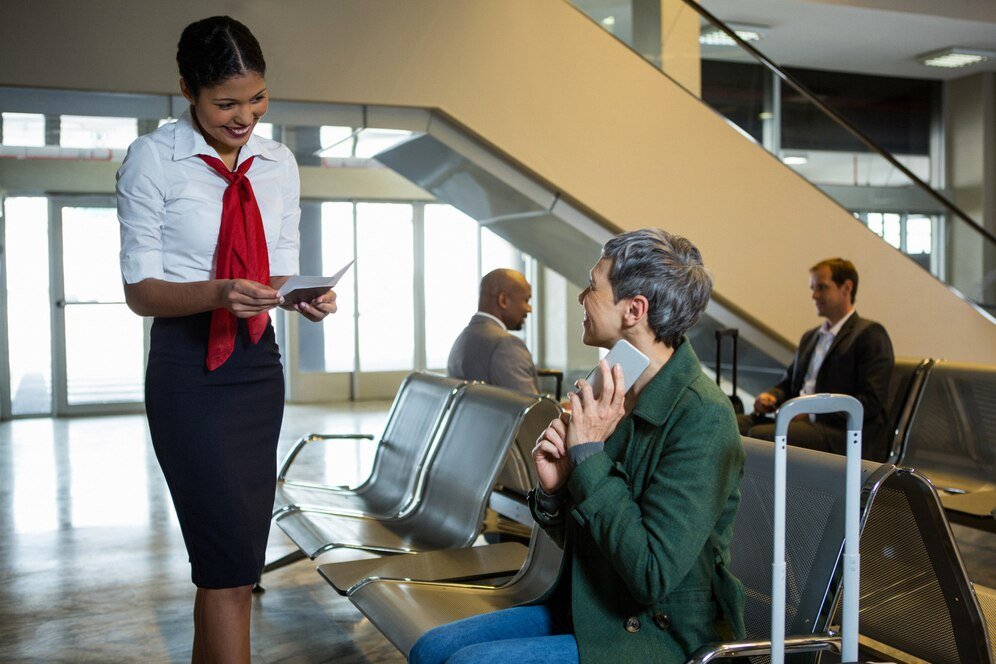
The requirements are for all cabin crew to conduct a thorough security check of the flight. This includes checking each cabin, the lavatories, stowage areas, galley, and crew rest area. It is also essential to ensure any seals or locks have not been tampered with prior to passengers boarding. Upon boarding, cabin crew members will continue with security checks by checking the boarding cards of each passenger, ensuring all identification cards are valid, and making sure the flight deck door is continually secured.
During the flight, security checks will be conducted regularly, and this includes monitoring passenger behaviour throughout the flight. In accordance security legislation, all cabin crew members must periodically check the toilets with intervals no longer than 20 minutes in between each check. However some airlines may have their own policies on security checks, which means they may have them done more frequently, such as every 15 minutes.
Checks are also performed to ensure no passenger is able to board with restricted items. This will be done on ground level, with the airport security checks, however, cabin crew must be on alert to any restricted items that do get on-board, and they must know the procedures to follow when it comes to restricted items, and dangerous goods.
Restricted items include:
1.Any sharp objects
2.Liquids
3.Gas canisters
4.Any flammable material/products
16.6: Identifying Security Threats

Security begins by ensuring every crew member is able to identify threats, or potential threats that could jeopardise flight safety. Some of the security threats can include:
1.Any attempt of aircraft sabotage
2.Hijacking
3.Bomb threat
4.Different threat levels
5.Security incidents involving discrepancies of baggage in holding, unattended luggage, and any attempts to breach the flight deck door
16.7: The Procedures for On-board Security Threats
These will differ with each airline, and will be coveredduring cabin crew induction training, and continual training programs. It will include the procedures staff need to use in the event of a bomb scare; the appropriate PA announcements to use; procedures for carrying out cabin security checks; measures for identifying suspect items; and establishing communication between the cabin crew and flight crew.This ensures that all crew members are aware of any security threats, or potential threats. The decision will be made by the pilot on the course of action to take, and this will depend on the severity of the situation. The flight crew will advise on how to proceed in the event of a security threat, for example, making the passenger safety announcement.
Module Summary
As a cabin crew member, one of your primary roles is to ensure that everyone on-board remains safe and secure. Safety includes identifying passengers who can pose a risk to others. These passengersmay not always want to hurt others, but they can pose a risk due to their behaviour. In addition, health can mean detecting hazards like low oxygen, as well as different forms of decompression.Throughout the course of any flight, you need to be able to identify all risks, and you need to know how to resolve problems when they arise. Throughout this process, you need to know how to communicate clearly and effectively.
.svg)